
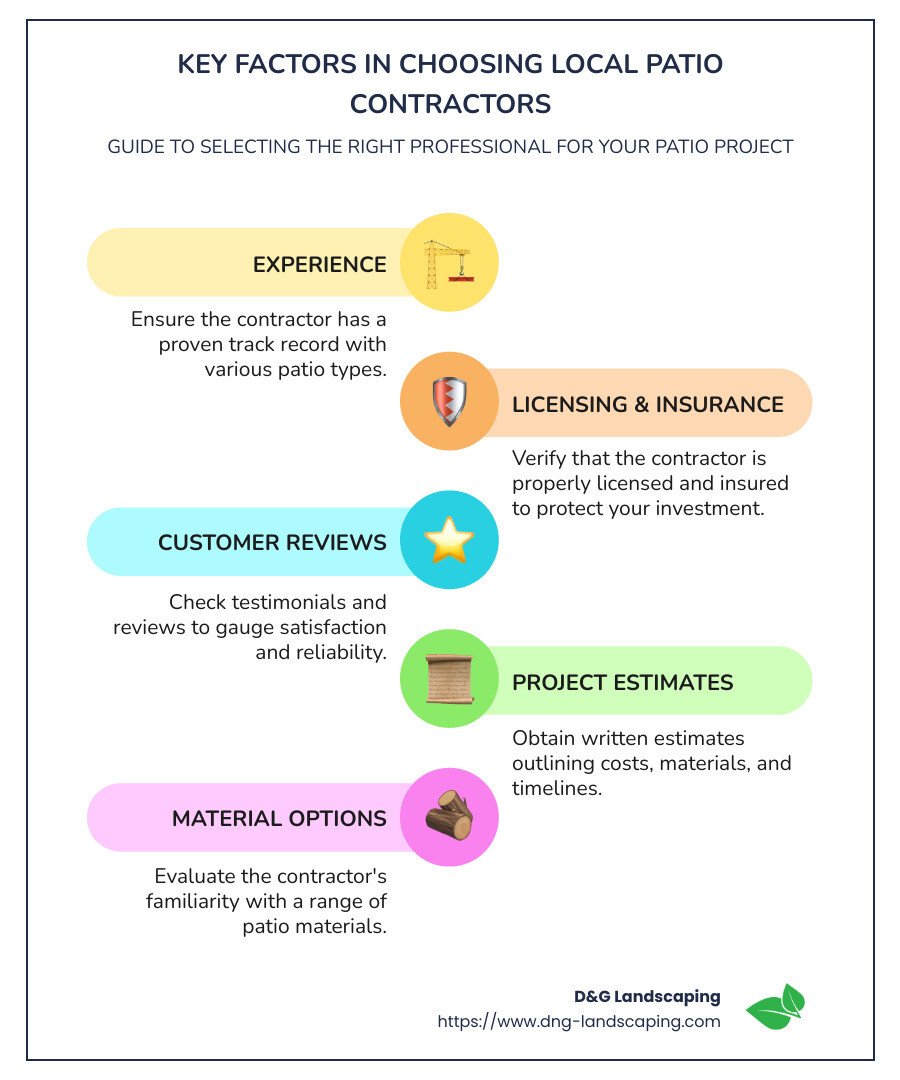
Local patio contractors play a vital role in changing your outdoor space into a functional and aesthetically pleasing area. Whether you’re looking to improve your home’s curb appeal or create a relaxing backyard oasis, choosing the right contractor is essential in bringing your vision to life. To ensure you make the best choice, consider these key factors:
- Experience: Hire contractors with a solid track record and expertise in installing various types of patios.
- Licensing and Insurance: Verify that the contractor is properly licensed and insured to protect your investment.
- Customer Reviews: Check testimonials and reviews to gauge customer satisfaction and contractor reliability.
- Project Estimates: Obtain written estimates that clearly outline costs, materials, and project timelines.
The right local patio contractors can make all the difference in your property’s value and usability. I’m Joe Dogherty, and with over three decades in the landscaping industry, I’ve guided countless clients in Tewksbury, MA, in selecting experienced and dependable local patio contractors. Let’s dig deeper into the essential aspects of choosing the best patio professional for your needs.
Quick look at local patio contractors:
– patio and walkway contractors near me
– patio renovation near me
– garden patio builders
Understanding Your Patio Needs
Before you dive into hiring a contractor, it’s crucial to understand what you need from your patio. This isn’t just about picking a spot in your backyard—it’s about envisioning how you want to use this new space.
Project Scope
First, consider the scope of your project. Are you looking for a small, cozy area for morning coffee? Or do you want a large space for entertaining guests? Knowing the size and purpose of your patio will help you communicate your needs clearly to potential contractors.
Design Preferences
Next, think about your design preferences. Do you want a modern look with clean lines and minimalist features? Or perhaps a rustic charm with natural materials and earthy tones? Your patio should reflect your personal style and complement the architecture of your home.
Material Choices
Choosing the right materials is key to a successful patio project. Here are some popular options:
- Concrete: Durable and versatile, concrete is a popular choice for many homeowners. It can be stamped or stained to mimic more expensive materials like stone or brick.
- Stone: Offers a natural and neat look. It’s perfect for creating a seamless transition between your home and garden.
- Brick: Known for its classic appeal and durability. Brick patios are slip-resistant and can withstand harsh weather conditions.
- Gravel: An affordable and easy-to-install option. Gravel patios provide excellent drainage and a casual look.
- Wood: Ideal for creating a warm and inviting atmosphere. However, wood requires regular maintenance to prevent weather damage.
Types of Patios
Understanding the different types of patios can help you make informed decisions about materials and design:
- Concrete Patios: These are cost-effective and can be customized with various finishes.
- Stone Patios: Offer a timeless look and are available in a variety of shapes and colors.
- Brick Patios: Provide a traditional appearance and are highly durable.
- Gravel Patios: Simple to install and perfect for informal settings.
- Wood Patios: Add a natural touch but need upkeep to maintain their beauty.
Decks vs. Patios
When choosing between a deck and a patio, consider the following factors:
- Foundation: Patios are built on the ground and require a stable, level base. Decks are raised structures that need a solid foundation to support their weight.
- Cost: Patios are generally less expensive than decks because they require less material and labor.
- Weight Restrictions: Patios can support heavy furniture and appliances, while decks may have weight limitations.
- Privacy: Decks offer more privacy as they are lifted, while patios are open and at ground level.
Understanding these elements will help you make informed decisions and communicate effectively with your contractor. By considering your project scope, design preferences, and material choices, you’ll be well on your way to creating a patio that meets your needs and improves your outdoor living space.
Researching Local Patio Contractors
When you’re ready to find the right local patio contractors, do thorough research. This ensures you get quality work and value for your money.
Word-of-Mouth Recommendations
Start by asking friends, family, or neighbors who have recently had patio work done. Personal recommendations can provide honest insights into a contractor’s reliability and craftsmanship. Emily F. from Omaha, for example, found success by trusting a recommended company to transform her single-family home into a rental property.
Online Reviews and BBB Accreditation
Online reviews are another invaluable resource. Websites like HomeAdvisor and Angi offer customer reviews that can help you gauge a contractor’s reputation. Look for consistent positive feedback on quality and timeliness. Also, check the Better Business Bureau (BBB) for accreditation and any resolved or unresolved complaints. This can offer peace of mind about a contractor’s professionalism.
Questions to Ask Potential Contractors
Once you’ve shortlisted potential contractors, it’s time to dig deeper. Prepare a list of essential questions to ensure they’re the right fit for your project:
- Contracting License and Insurance: Verify that the contractor is licensed and insured. This protects you from liability in case of accidents or damages during the project.
- Project Timeline: Ask about the estimated timeline for completion. Ensure it aligns with your schedule and expectations.
- Cost Estimates: Request a detailed estimate that includes all potential costs. This helps avoid surprises later on.
For instance, Douglas V. praised his contractor for providing a fair and reasonable cost, which was a key factor in his decision-making process.
Evaluating Contractor Portfolios
Reviewing a contractor’s portfolio is crucial. It gives you a visual sense of their style and capabilities.
- Previous Projects: Examine examples of their past work. This can reveal their expertise in various patio styles and materials.
- Customer Testimonials: Read or ask for testimonials from previous clients. Positive feedback on reliability and craftsmanship can be a good indicator of what to expect.
- Design Versatility: Ensure the contractor can deliver a design that matches your vision. A versatile contractor will adapt to different styles, whether you prefer modern minimalism or rustic charm.
Valerie R. highlighted how Weilage Landscaping efficiently completed her retaining walls and steps, showcasing their ability to handle complex projects with precision.
By following these steps, you’ll be well-equipped to choose a contractor who meets your needs and improves your outdoor space.
Comparing Quotes and Services
Choosing the right local patio contractors involves more than just picking the lowest price. It’s about understanding what you’re getting for your money and ensuring the contractor’s services align with your vision.
Getting Detailed Estimates
When comparing quotes, it’s crucial to get detailed, itemized estimates. This means breaking down costs for materials, labor, and any additional services. A comprehensive estimate helps you see where your money is going and highlights any hidden costs that could surprise you later.
Many contractors offer free estimates, which is a great starting point. Make sure these estimates are detailed. They should include:
- Material Costs: Different materials have different price points. For example, gravel is generally cheaper than flagstone. Knowing the cost per square foot for materials helps you decide based on your budget.
- Labor Fees: Understand how much of the total cost goes toward labor. This can vary greatly depending on the complexity of the design and the contractor’s expertise.
- Additional Features: If you’re considering extras like a fire pit or built-in seating, these should be clearly listed with their costs.
Understanding Service Packages
Once you have a few estimates, look at the service packages offered. These packages can vary widely between contractors, so understand what’s included.
- Installation Services: Ensure the contractor has the skills needed for a seamless installation. This includes everything from site preparation to the final touches.
- Maintenance Plans: Some contractors offer ongoing maintenance services. This can be valuable for keeping your patio in top condition, especially if it includes complex features or specific materials like flagstone, which may require special care.
- Warranty Details: A good contractor will stand by their work. Look for warranties that cover both labor and materials. This provides peace of mind that you’re protected against defects or issues down the line.
By carefully evaluating these aspects, you can make an informed decision that balances cost with quality and ensures your patio project is a success.
Ensuring Compliance and Safety
When starting on a patio project, ensuring compliance with local regulations and prioritizing safety is crucial. This not only protects your investment but also ensures a smooth construction process.
Permit Requirements
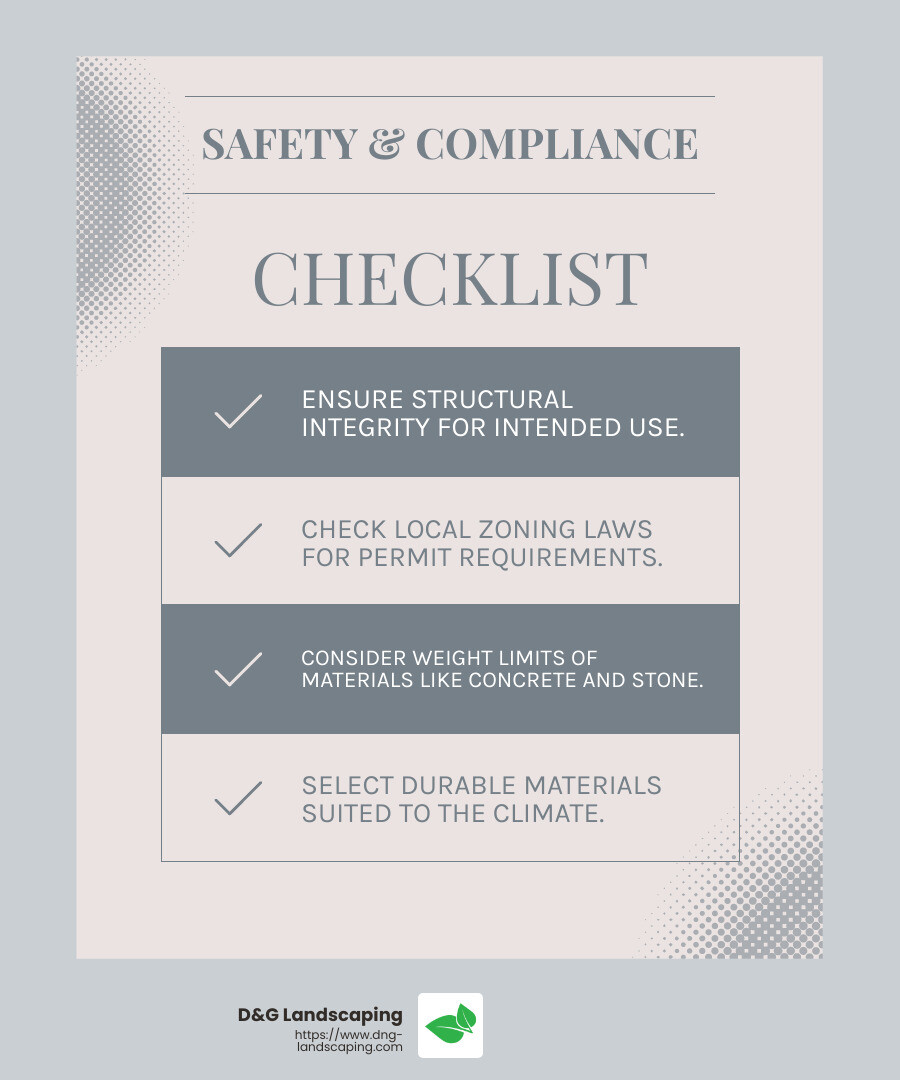
Before breaking ground, check if you need permits. Permit requirements vary by location and project scope. Typically, a permit is necessary if the patio affects the structural integrity of your property or if it’s a large installation.
Local zoning laws often dictate the need for permits. These laws can specify setbacks (how far structures must be from property lines), allowable materials, and size restrictions. To avoid future headaches, consult with your local zoning office or a knowledgeable contractor like D&G Landscaping, who can guide you through the process.
Inspections are another critical aspect. Most permits require an inspection at various stages of the project. This ensures the work complies with safety standards. An inspection might cover the foundation, drainage, and overall construction quality.
Safety Considerations
Safety should be at the forefront when planning your patio. Here are key considerations:
- Structural Integrity: Ensure the patio design supports the intended use. For instance, a patio meant for a hot tub or heavy furniture must have a robust foundation.
- Weight Limits: Different materials have varying weight capacities. Concrete and stone can handle more weight than wood or gravel. Discuss weight limits with your contractor to avoid structural issues.
- Material Durability: Choose materials suited to your climate and intended use. In areas with harsh weather, durable materials like concrete or stone are ideal. They withstand erosion and temperature fluctuations better than wood or gravel.
By focusing on compliance and safety, you ensure your patio not only looks great but also stands the test of time. This attention to detail helps avoid costly repairs and ensures a safe, enjoyable outdoor space for years to come.
Next, we’ll explore how to make the final decision when selecting a contractor, focusing on reliability, customer service, and project alignment.
Making the Final Decision
Choosing the right patio contractor is a critical step in ensuring your project is a success. Here, we’ll discuss why work with a licensed builder and how to finalize your contract.
Importance of a Licensed Builder
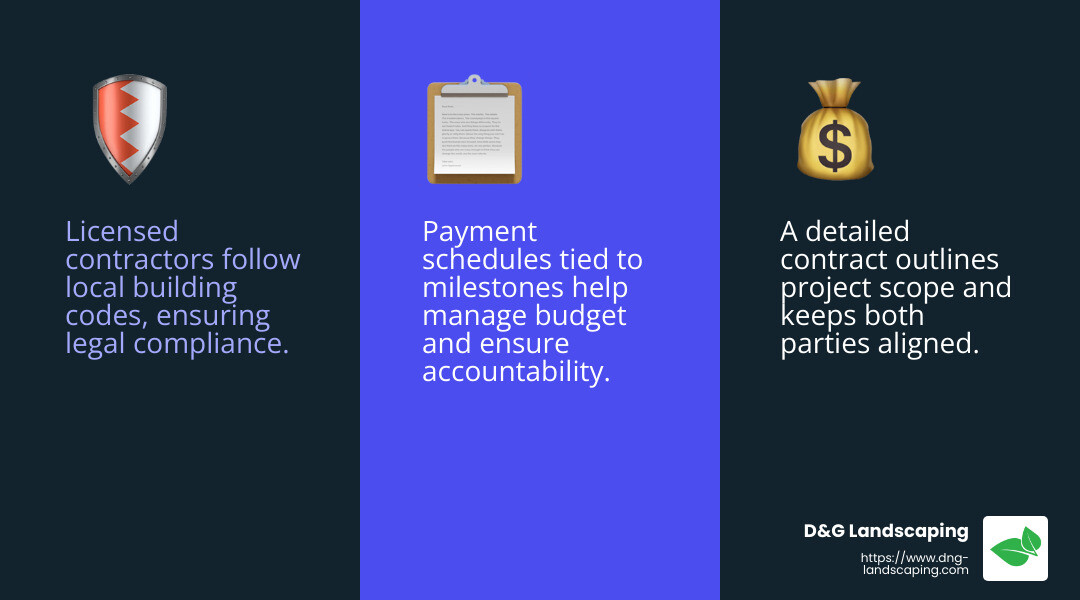
When selecting a local patio contractor, prioritize those who are licensed. A licensed builder not only brings professionalism and expertise but also ensures quality assurance and legal compliance. They are more likely to follow local building codes and standards, which can save you from potential legal issues down the line.
Licensed contractors are also typically bonded and insured. This means that if something goes wrong during the project, you are financially protected. As highlighted in the Forbes article, always verify the contractor’s license number and insurance certificate. This step is crucial for your peace of mind.
Finalizing the Contract
Once you’ve chosen a reliable contractor, it’s time to finalize the contract. A well-drafted contract is your roadmap to a successful project. Here’s what to include:
- Terms and Conditions: Clearly outline the scope of work, materials to be used, and any specific design elements. This ensures both parties understand what is expected.
- Payment Schedules: Establish a payment plan that aligns with project milestones. It’s common to pay a deposit upfront, with subsequent payments tied to the completion of specific phases. This approach helps manage your budget and keeps the contractor accountable.
- Project Milestones: Define key milestones and deadlines to track progress. This could include stages like design approval, foundation completion, and final inspection. Having these milestones in place helps prevent delays and ensures the project stays on track.
By focusing on these elements, you ensure a smooth and transparent process. This not only protects your investment but also sets the stage for a successful partnership with your contractor.
In the next section, we’ll address frequently asked questions about local patio contractors, providing you with even more insights to make informed decisions.
Frequently Asked Questions about Local Patio Contractors
Do I need a permit to build a patio?
Yes, in most cases, you will need a permit to build a patio. Local zoning laws often require permits to ensure that your patio complies with building codes and safety standards. The requirements can vary based on your location and the scope of your project. To avoid any legal issues, check with your local authorities or consult your local patio contractor. They should be familiar with the permit process and can often assist you in obtaining the necessary approvals.
How long does it take to build a patio?
The time it takes to build a patio can vary widely depending on several factors, including the size of the patio, the materials used, and the complexity of the design. On average, a standard patio project might take anywhere from a few days to a couple of weeks. However, if your project involves custom designs or additional features like a shade structure or integrated landscaping, it may take longer. Discuss the timeline with your contractor to get a more accurate estimate based on your specific project.
What materials are best for patios?
Choosing the right materials for your patio depends on your personal preferences, budget, and how you plan to use the space. Here are some popular options:
- Concrete: Durable and versatile, concrete is a common choice for patios. It can be stamped or stained to mimic the look of more expensive materials like stone or brick.
- Stone: Natural stone patios offer a classic and neat look. They are available in various types, such as slate, flagstone, and limestone, each with its own unique appearance and characteristics.
- Brick: Known for its timeless appeal, brick is a durable option that works well in both traditional and contemporary settings. It provides a warm, inviting look and is relatively easy to maintain.
- Gravel: A budget-friendly option, gravel patios are easy to install and provide excellent drainage. They are ideal for informal, rustic settings.
- Wood: While less common for patios, wood offers a natural aesthetic and can be a good choice for decks. It requires regular maintenance to protect against weathering.
Discuss your options with your local patio contractor to determine the best materials for your needs and environment. They can provide insights into the pros and cons of each material and help you make an informed decision.
Conclusion
Choosing the right local patio contractor can make all the difference in changing your outdoor space into a beautiful, functional area. At D&G Landscaping, we pride ourselves on delivering top-notch service and outstanding results. Our commitment to quality is evident in every project we undertake, whether it’s a simple patio installation or a complex landscape design.
With over 30 years of experience, our expertise ensures that your patio not only looks great but also stands the test of time. We focus on sustainable solutions that improve the beauty of your home while respecting the environment. Our team is dedicated to understanding your vision and bringing it to life with precision and care.
Customer satisfaction is at the heart of what we do. We believe in building strong relationships with our clients by providing personalized service and attention to detail. From the initial consultation to the final installation, we work closely with you to ensure that your needs are met and your expectations are exceeded.
Whether you’re looking to create a cozy spot for family gatherings or a stylish space for entertaining guests, D&G Landscaping is here to help. Our team is ready to guide you through every step of the process, from selecting the right materials to finalizing the design.
Ready to start your patio project? Contact us today to schedule a consultation and find how we can transform your outdoor space into a stunning retreat.
