

Garden patio layers are the foundational elements that grant patios their durability, beauty, and functionality. For those busy Tewksbury property managers seeking high-quality landscaping solutions, understanding the importance of these layers is crucial.
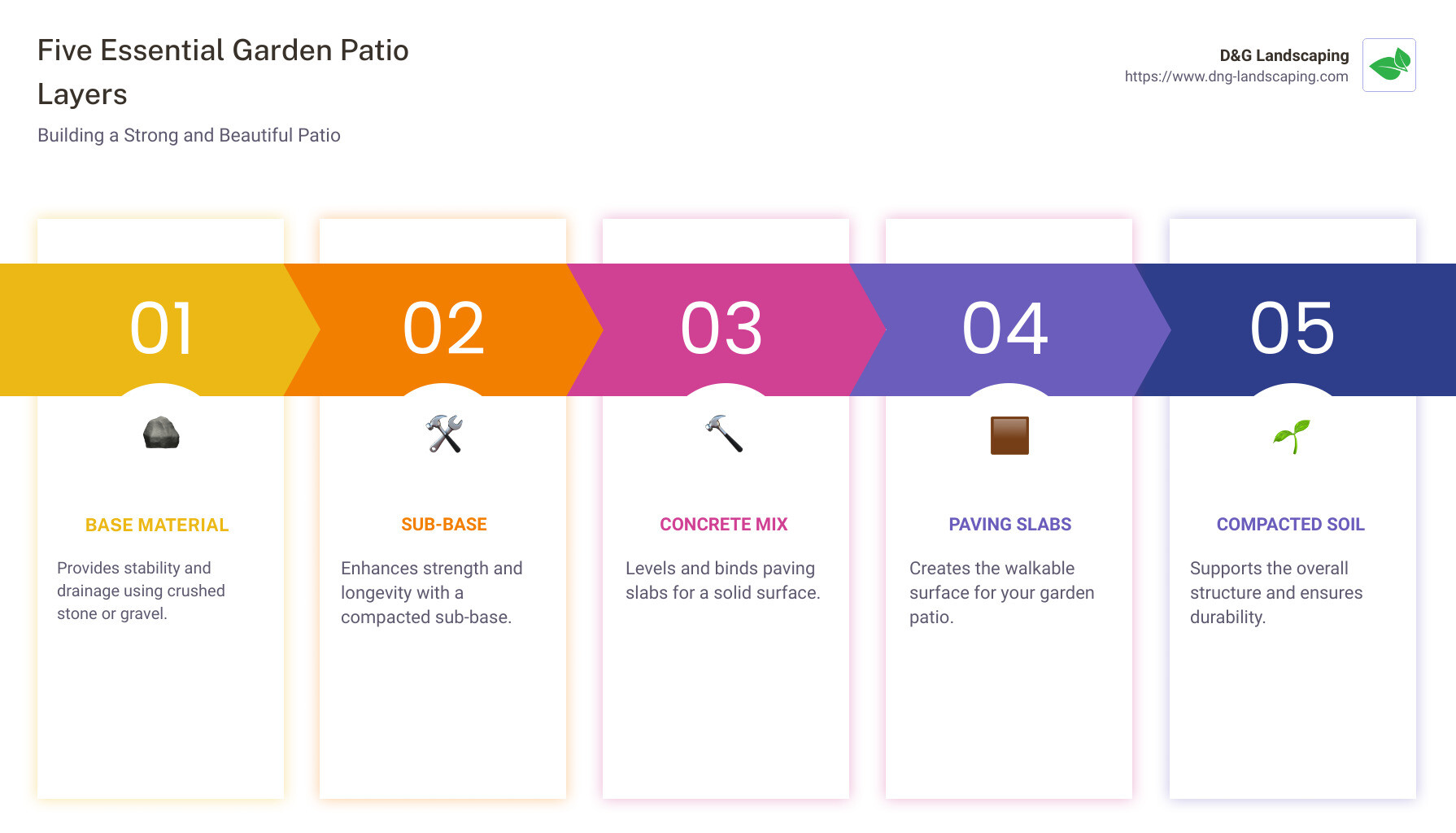
The five essential garden patio layers include:
- Base Material: Provides stability and drainage.
- Sub-Base: Improves strength and longevity.
- Concrete Mix: Levels and binds the slabs.
- Paving Slabs: Creates the surface you walk on.
- Compacted Soil: Supports the overall structure.
Utilizing the right materials ensures your patio is long-lasting and visually appealing.
I’m Joe Dogherty, owner of D&G Landscaping in Tewksbury. With over 30 years in landscaping, I’ve mastered garden patio layers to transform outdoor spaces beautifully and sustainably. Let’s explore how these layers create stunning patios while enhancing property value and usability.
Garden patio layers vocabulary:
– Patio and garden design
– garden patio builders
– patio renovation near me
Essential Garden Patio Layers
When it comes to creating a beautiful and durable patio, understanding the garden patio layers is key. Each layer plays a vital role in ensuring your patio stands the test of time. Let’s break down these layers and how they come together to form the perfect patio.
Choosing the Right Base Material
The base material is the unsung hero of any garden patio. It provides stability and allows for proper drainage. Here are some common base materials:
- Crushed Stone: Great for drainage and stability.
- Sand: Helps with leveling but isn’t as stable as crushed stone.
- Compacted Soil: Provides a solid foundation but may require additional stabilization.
- Concrete: Offers a strong base but can be more expensive.
- Gravel: Affordable and easy to work with, but may shift over time.
Choosing the right base material depends on your budget, climate, and the intended use of your patio.
Laying the Sub-Base
The sub-base is crucial for enhancing the strength and longevity of your patio. The most common sub-base materials include:
- Hardcore: A mix of crushed stones and rubble.
- Compacted Sub-Base: Compacted layers of material to ensure stability.
- MOT Type 1: A popular choice in the UK, made from crushed limestone.
- Crushed Limestone: Durable and provides excellent drainage.
A properly laid sub-base will prevent your patio from shifting or sinking over time.
Adding the Concrete Mix
Once your sub-base is in place, it’s time to add the concrete mix. This layer helps level the surface and binds the paving slabs. Here’s how to do it right:
- Leveling: Ensure the concrete is spread evenly to prevent uneven surfaces.
- Setting Time: Allow adequate time for the concrete to set before proceeding. This is crucial for a strong foundation.
A well-prepared concrete layer ensures the paving slabs remain in place and level.
Placing the Paving Slabs
The final layer involves placing the paving slabs. These create the surface you walk on and add aesthetic appeal. Here’s what you need to know:
- Mortar Mix: Use a mix of sharp sand and cement to secure the slabs.
- Sharp Sand: Provides a smooth surface for the slabs.
- Cement: Binds the slabs to the concrete mix.
When laying the slabs, ensure they are evenly spaced and level. This not only looks good but also prevents tripping hazards.
By understanding and implementing these garden patio layers, you can create a stunning and durable patio that improves your outdoor space. It’s all about choosing the right materials and following a structured process.

Step-by-Step Guide to Laying a Garden Patio
Creating a garden patio involves several important steps. Each step is crucial to ensuring a patio that is not only beautiful but also durable. Let’s walk through the process, from preparation to the finishing touches.
Preparing the Area
Preparation is the first and most important step. Start by marking the area where you want to lay your patio. Use a tape measure to get the exact dimensions and mark the perimeter with string or marking spray.
Next, you’ll need to excavate the area. Dig down to the required depth, usually about 6 to 8 inches, to allow for the various garden patio layers. Check the depth with a measuring tape to ensure accuracy.
Installing Edging
Edging is essential to keep your patio materials in place. You can choose from various materials like timber, bricks, stone, or even bamboo for a more natural look. Spiked timber borders are a budget-friendly option and are easy to install.
Place the edging along the marked perimeter, making sure it’s secure and level. This will help keep the base materials from spreading out over time.
Compacting the Base
Once the area is prepared, it’s time to compact the base. Use a landscape rake to spread the base material evenly. A tamper or plate compactor is essential for compacting the base layers, ensuring a stable foundation. Lightly wet the area with a garden hose to help in the compaction process.
Adding and Leveling Sand
After compacting the base, it’s time to add a layer of paver sand. Lay down electrical conduit pipes to act as guides for leveling. Spread the sand evenly and use a leveling board to smooth it out. Remove the conduits and fill the gaps with sand, ensuring the entire area is level.
Placing and Cutting Pavers
Now, it’s time to lay the paver stones. Start from a corner and work your way out. Use a masonry saw to cut any pavers to fit, and always wear protective gear like gloves and goggles.
Place each paver carefully, ensuring they are level and spaced evenly. This not only makes your patio look great but also prevents trips and falls.
Finishing Touches
Finally, add the finishing touches. Use paver edging to secure the perimeter and fill the gaps between pavers with paver sand. Sweep the sand into the gaps using a push broom. Compact the entire area once more with a plate compactor to lock everything in place.
By following these steps, you’ll have a beautiful and functional garden patio that can be enjoyed for years to come. The key is in the details, so take your time with each layer to ensure a perfect finish.
Popular Patio Designs and Ideas
Designing the perfect patio can transform your outdoor space into a sanctuary. Whether you’re dreaming of a multi-level retreat or a cozy corner for relaxation, there are plenty of inspiring ideas to explore.
Multi-Level Patio with Water Feature
Imagine stepping out onto a multi-level patio with a soothing waterfall and stream. This design not only adds beauty but also brings the peaceful sounds of flowing water to your backyard. Using low-maintenance landscaping like ornamental grasses can add color and texture without much upkeep. This type of design is ideal for those who want a serene escape right at home.
Poolside Patio with Pergola
A poolside patio with a pergola offers the perfect blend of shade and sun. This design provides ample space for both dining and relaxation. Under the pergola, you can create a cozy dining area, while lounge chairs by the pool offer a spot for soaking up the sun. The pergola not only adds style but also creates a comfortable space to escape the midday heat.
Patio Kitchen with Pergola
For those who love cooking outdoors, an outdoor kitchen with a pergola is a dream come true. This setup allows home cooks to enjoy the fresh air while preparing meals. The pergola provides shade, making it a comfortable spot even on warm days. With a well-designed outdoor kitchen, you might find yourself spending more time cooking outside than in!
Asian-Inspired Patio
An Asian-inspired patio brings a touch of tranquility to your backyard. With a relaxing sitting area and comfortable furniture, this design focuses on simplicity and peace. You can even build your own outdoor furniture to add a personal touch. This style is perfect for those who appreciate a minimalist approach and want a space to unwind.
Modern Patio with Minimalist Landscaping
In small yards, a modern patio with minimalist landscaping can maximize space. This design typically includes a compact cooking and dining area, surrounded by ornamental grasses that define the space. The clean lines and simple plantings create a sleek look that is both stylish and functional. It’s a great choice for those who want a contemporary feel without a lot of maintenance.
Each of these designs offers unique elements to improve your outdoor living space. Whether you’re drawn to the calming effect of water or the practicality of an outdoor kitchen, there’s a patio design that can meet your needs and lift your backyard experience.
Frequently Asked Questions about Garden Patio Layers
What is the Best Base Layer for a Patio?
When it comes to creating a solid foundation for your patio, choosing the right base layer is crucial. A well-prepared base ensures stability and longevity, preventing your patio from shifting or sinking over time. Crushed stone is often recommended as the best base layer due to its excellent drainage properties and ability to compact tightly. This material provides a stable base that can withstand heavy loads, making it ideal for patios with outdoor furniture or grills.
Sand is another popular choice, often used in combination with crushed stone. It helps to create a smooth, even surface on which to lay your paving slabs. Compacted soil can also be used, especially in areas with good drainage, but it may not provide the same level of stability as crushed stone or sand. For a more permanent solution, consider using concrete as your base layer. It offers unparalleled durability but requires more effort and expertise to install.
What are the Layers for a Patio?
Building a patio involves several key layers, each playing a vital role in the overall structure. Here’s a simple breakdown of the garden patio layers:
- Sub-base: This is the foundation layer, typically made of compacted crushed stone or gravel. It provides stability and drainage, preventing water from pooling under your patio.
- Concrete mix: In some designs, a layer of concrete is added on top of the sub-base to further solidify the foundation. This layer is particularly important for patios that will bear heavy loads.
- Paving slabs: These are the visible surface of your patio, available in various materials like stone, brick, or concrete. They are laid on top of a bed of mortar or sand.
- Gaps: Small gaps between the paving slabs are filled with polymeric sand or jointing sand to prevent weeds from growing and to lock the slabs in place.
Each layer serves a specific purpose, ensuring your patio is both functional and aesthetically pleasing.
What is the Best Mix for Laying a Patio?
The mortar mix used for laying paving slabs is a critical component in patio construction. A typical mix consists of sharp sand and cement. The standard ratio is four parts sharp sand to one part cement. This combination provides a strong adhesive that holds the slabs in place while allowing for some flexibility to accommodate temperature changes.
When mixing mortar, it’s important to achieve the right consistency—not too dry and not too runny. This ensures that the slabs adhere properly without slipping or cracking. For larger projects, consider using a cement mixer to save time and ensure a consistent mix.
By understanding these essential components and techniques, you can create a patio that not only improves your outdoor space but also stands the test of time. Whether you’re tackling a DIY project or hiring professionals, these insights will guide you in making informed decisions.
Conclusion
Creating a stunning patio is more than just laying stones; it’s about crafting a space that improves your outdoor experience. From the foundational garden patio layers to the finishing touches, every step plays a vital role in the longevity and beauty of your patio. By choosing the right materials and following proven techniques, you ensure your patio is both functional and aesthetically pleasing.
Benefits of a Well-Constructed Patio:
- Durability: A well-laid patio with proper layers can withstand the elements and heavy use, providing a long-lasting outdoor space.
- Aesthetic Appeal: With various design options like multi-level patios or minimalist landscaping, your patio can be a beautiful extension of your home.
- Increased Property Value: A professionally installed patio can boost the value of your property, making it a worthwhile investment.
At D&G Landscaping, we pride ourselves on our commitment to quality and customer satisfaction. With over 30 years of experience, we offer comprehensive landscape design and installation services. Whether you’re dreaming of a cozy Asian-inspired patio or a spacious poolside retreat, our team is here to bring your vision to life.
Contact Us Today!
Ready to transform your outdoor space? Let our experts guide you through the process. Visit our Patio Contractors in Westford, MA page for more information, or give us a call to discuss your project. We’re excited to help you create the perfect patio for your home or business.
A great patio isn’t just about the materials—it’s about creating a space where memories are made. Let’s make your outdoor dreams a reality!
